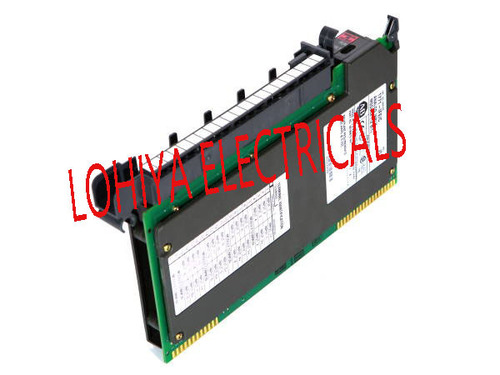
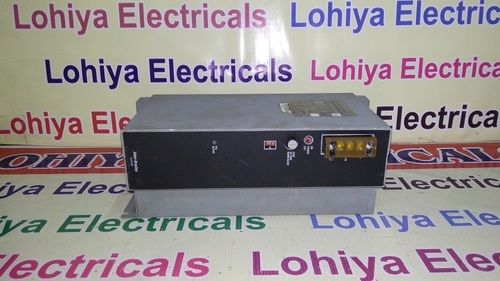
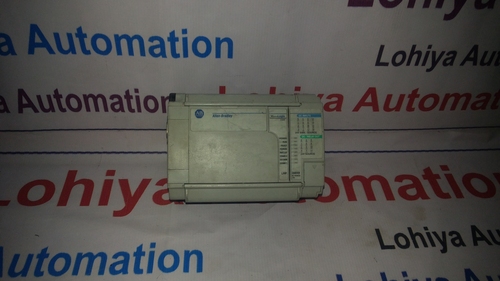
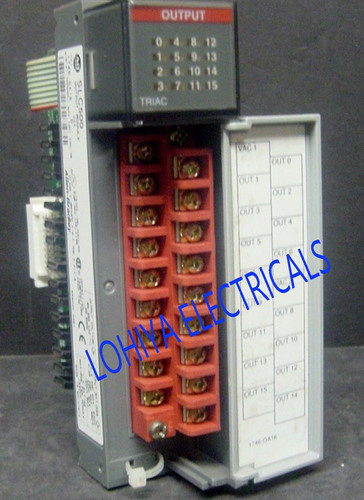
The ALLEN BRADLEY MODULE range offers unmatched adaptability, enabling configuration for digital or analog input/output applications. Its compatibility with numerous PLC and I/O platforms means seamless installation and operation in both legacy and modern systems. Support for field power, backplane power, and various communication interfaces allows users to tailor the module to specific industrial needs, maximizing productivity and reliability across process automation scenarios.
Manufactured using durable ABS/polycarbonate enclosures and premium components, these modules can withstand challenging industrial conditions. Their excellent isolation voltage and overvoltage protection safeguard sensitive electronics, while diagnostic LED indicators and hot swap support ensure minimal downtime and straightforward maintenance. The operating temperature range of 0C to 60C and IP20 rating make them well-suited to a wide range of industrial environments.
FAQs of ALLEN BRADLEY MODULE:
Q: How do I select the appropriate ALLEN BRADLEY MODULE model for my application?
A: Start by identifying your required input/output type (digital or analog), mounting preference (DIN rail or panel), and desired communication interface (Ethernet/IP, DeviceNet, ControlNet, or Backplane). Ensure the models voltage compatibility and dimensions fit your control panel, and confirm PLC or I/O platform compatibility. Consult model specifications and datasheets for precise selection.
Q: What are the benefits of using ALLEN BRADLEY MODULES with hot swap and diagnostic LED features?
A: Hot swap support enables modules to be replaced or added without system shutdown, reducing downtime. Diagnostic LEDs provide real-time status of modules and channels, allowing for quick troubleshooting and enhanced system reliability, especially valuable in industrial automation processes requiring high uptime.
Q: When should I use a digital module versus an analog module?
A: Use digital modules for applications that require simple on/off or discrete-state control, such as switching devices or monitoring binary sensors. Choose analog modules for processes needing measurement and control of variable signals, like temperature, pressure, or flow, to provide precise regulation and feedback.
Q: Where can ALLEN BRADLEY MODULES be installed and in what types of environments do they operate effectively?
A: These modules are suitable for industrial environments such as manufacturing plants, process control rooms, and automation suites. Their rugged construction, IP20 rating, and wide temperature tolerance make them effective in controlled indoor settings where protection from direct moisture and excessive dust is maintained.
Q: What is the installation process for DIN rail or panel mounting these modules?
A: To mount on a DIN rail, simply snap the module into place and secure it according to the installation guidelines. For panel mounting, attach using recommended screws and mounting plates. Connect power, communication, and I/O wiring via screw or removable terminal blocks, ensuring adherence to wiring and safety standards.
Q: How does the module ensure safe operation and protect connected devices?
A: With a robust isolation voltage of 1500V AC field to backplane and integrated overvoltage protection, these modules safeguard both internal electronics and connected field devices. This minimizes risks associated with electrical surges, noise, and ground loops, ensuring long-term system safety and stability.
Q: What advantages do the Ethernet/IP, DeviceNet, and ControlNet interfaces provide?
A: These communication protocols ensure fast, reliable, and scalable integration within industrial networks. Ethernet/IP allows for high-speed data exchange and remote diagnostics, while DeviceNet and ControlNet facilitate efficient control and monitoring of distributed devices, making them ideal for complex automation setups.

 Send Inquiry



 Send Inquiry

 Send Inquiry